
How the Light Found Me
10/25
In 1998, at twenty-nine, I began my journey as an artist. It happened through loss — the death of my mother, who was only forty-seven. During the final week of her life, I sat by her bedside, keeping vigil in case she needed anything. She drifted in and out of consciousness, leaving long hours of silence for reflection. I returned to San Francisco with a sense that something had to change.
Before that time I had lived like a nomad — hitchhiking up and down the East Coast, taking a train across the country with three hundred dollars in my pocket, and landing for a time in Eugene, Oregon. Eventually, I made my way to San Francisco. After only a few months there, I met a writer from New York at a Poetry reading in a Polk Street cafe who invited me to come east to work on poetry and perform at open mics. I left the city to join him, and together we read our work at poetry slams in New York City. But after three months, something in me longed to return to San Francisco — the one place that truly felt like home.
It was there, early one morning, that I received the call: my mother had cancer and only three months left to live.
After she passed, I returned to San Francisco determined to make something of myself. I enrolled in a figure-drawing class at City College, and it changed the course of my life. I stayed for six years, studying intensely, until my drawing teacher told me, “You have a lot of potential — you need to go to a more serious art school.” He helped me assemble a portfolio for the San Francisco Art Institute. When the acceptance letter arrived — with scholarships — I was ecstatic.
I majored in painting and studied first with Bruce McGaw, who taught me not to fear the surface: to scrape, reapply, and scrape again until something appeared. The following semester I needed an elective and thought, why not Photography 101 with Henry Wessel? When a scheduling conflict arose — the school wanted me to take a theory class instead — I told Henry. He went straight to the administration, spoke on my behalf, and got the conflict removed. That was my first impression of him: dedicated, dryly funny, a little imposing, but utterly astute.
I had no idea at the time that taking his class — or meeting him at all — would change the course of my life.

Photography, Legacy, and My Creative Path
03 /26
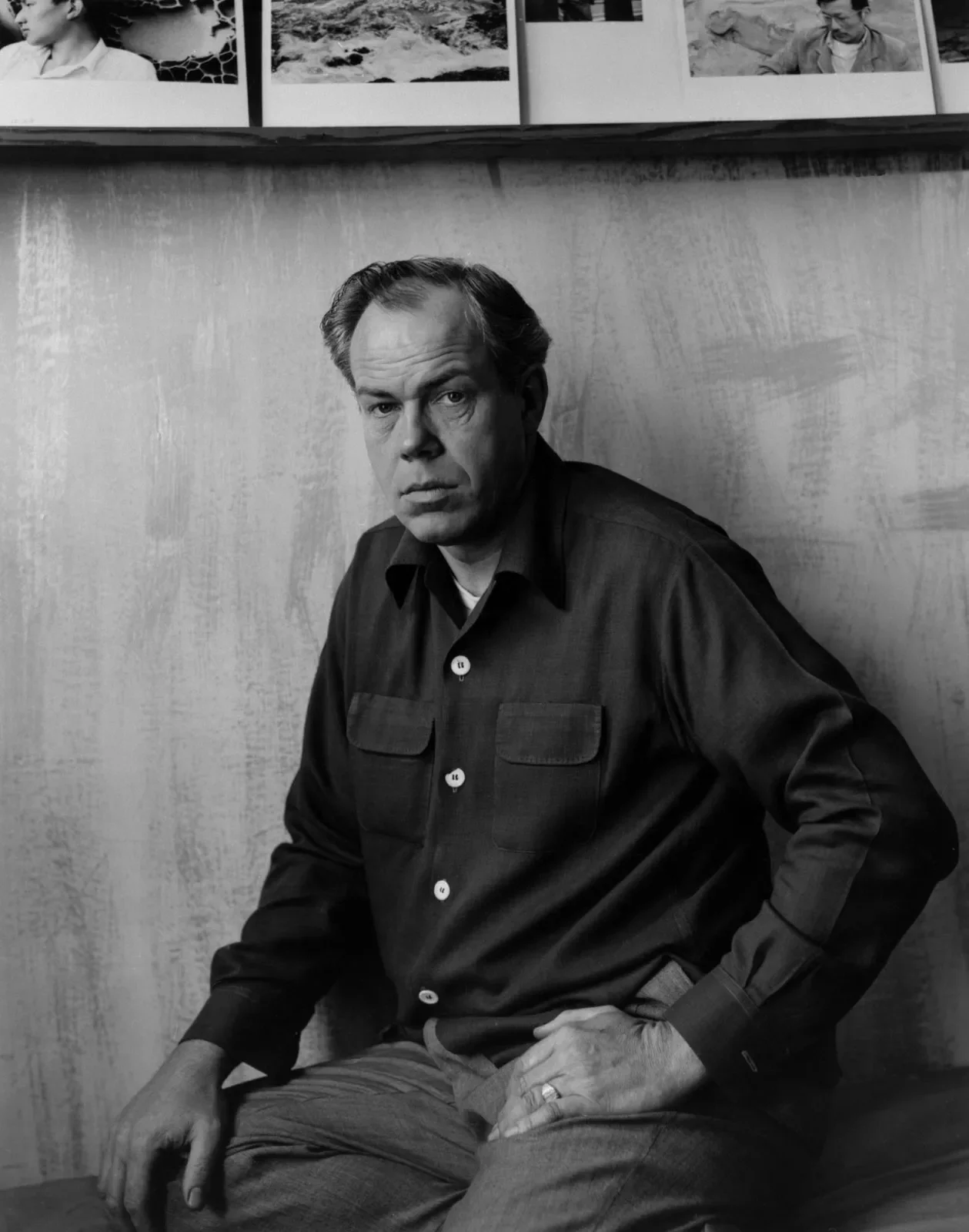
Minor White
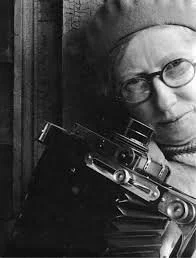
Imogen Cunningham
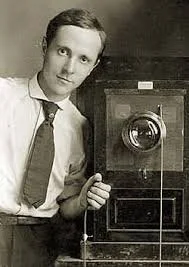
Edward Weston
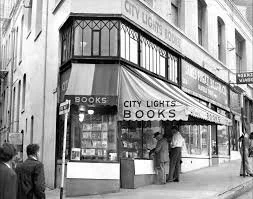
Beatnik Hangout, San Francisco
The Photography Department at the San Francisco Art Institute (SFAI), founded in 1946 by Ansel Adams and Minor White, quickly became a hub for artistic innovation and technical mastery. Known for its focus on “straight photography” and its central role in the Golden Decade (1945-1955), the department helped redefine the medium during a transformative period in American photography.
This era was marked by iconic photographers like Edward Weston, Dorothea Lange, Imogen Cunningham, and Lisette Model, who either taught at or visited SFAI. They brought their unique artistic visions into the classroom, blending technical expertise with personal expression. Adams' Zone System, a method of visualizing the final print before exposure, was central to teaching students the technical precision that would define the period. But the department’s real distinction came from its emphasis on the creative side of photography, encouraging students to experiment and explore their own voices.
The Golden Decade also coincided with a cultural renaissance in the Bay Area, where San Francisco became a vibrant center for avant-garde art. The San Francisco Art Institute was at the heart of this creative explosion, where photography intersected with the growing movements of abstract expressionism and the Beat Generation. The department’s integration with this dynamic art scene provided students with a broader artistic perspective and an environment ripe for experimentation. SFAI was not just a school; it was a crucible for the cross-pollination of ideas between photographers, painters, and poets, shaping the visual language of the era.
By the late 1940s, the department had firmly established itself as a leading force in American photography education, blending technical discipline with artistic freedom. The legacy of the SFAI Photography Department continues to inspire new generations of photographers, ensuring that its pioneering spirit lives on as a beacon for creative expression.
It was an incredible experience to walk into that photography department each day for two years. Even in 2005, its creative energy was still palpable within those concrete walls—the faint scent of photo chemicals, students gathered around the print table in quiet discussion, and light pouring in from the high windows above. It’s an environment I remain deeply grateful for, one that continues to shape how I see and make images.
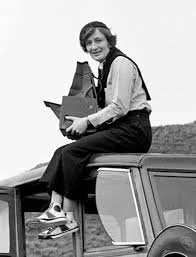
Dorothea Lange
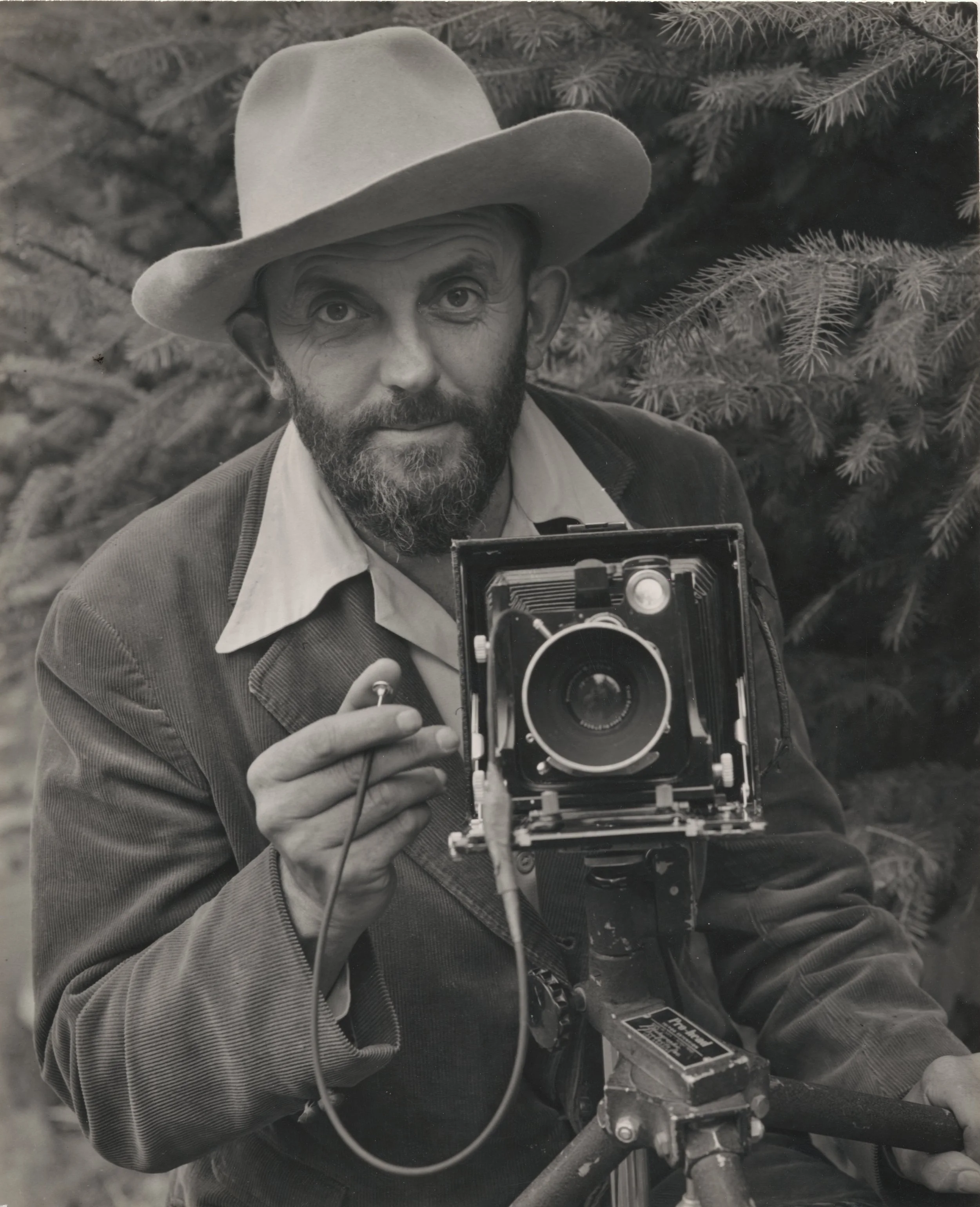
Ansel Adams
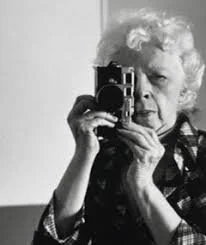
Lisette Model
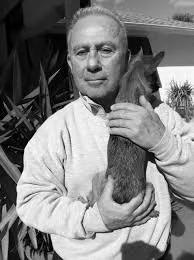
Henry Wessel
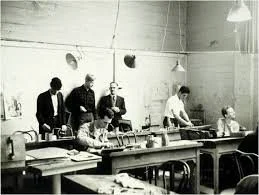
San Francisco Art Institute
Generative Dramatics: The Secret War Against the Artist Type
The Ghost Ship Script: Unmasking 20 Years of Generative Dramatics
5/26
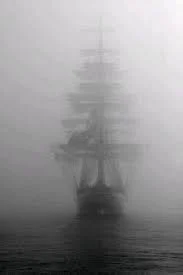
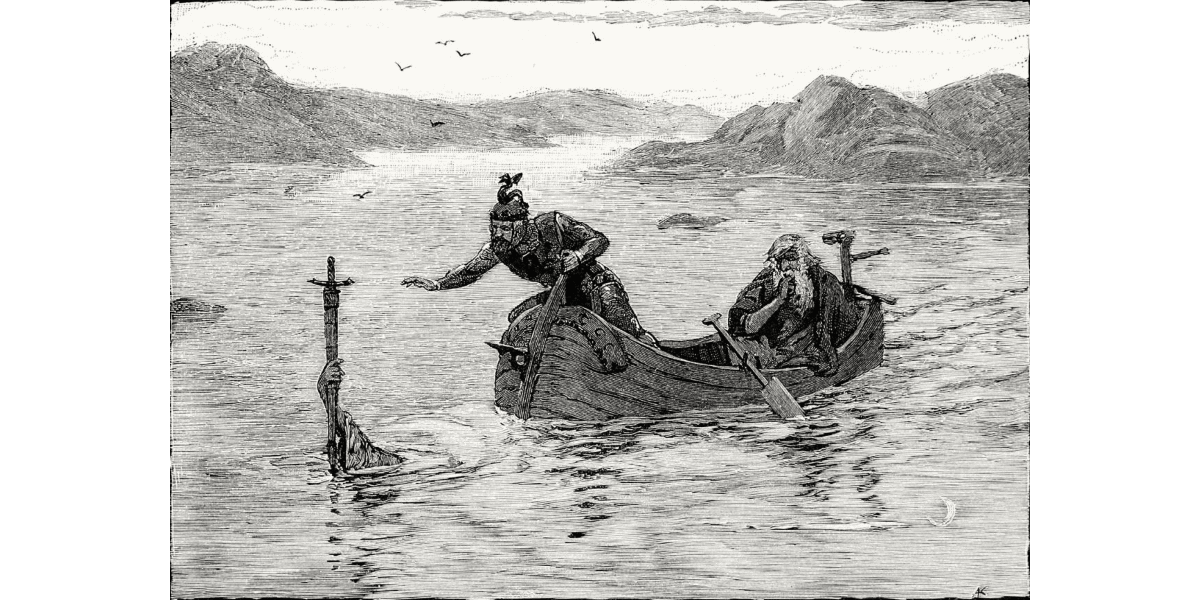
This analysis combines two poems from 2009 and 2026 to highlight a consistent "Ghost Ship" narrative used over 17 years to manipulate perception. By comparing the scripts, the repeated nautical imagery, themes of failing sight, and soul-consumption expose a coordinated, long-term dramatic operation.
First, the 2009 poem I received by email:
DELIVERED
how is it that i’ve grow so weak
I can barely speak,
my soul leaks from my body,
a shell flecked with dour imagery,
eyes no longer see symmetry
with myself and the world.
how is it these words
seem much more than my hands
than my heart in my hands
than the blood through my finger tips
painting a parting gift
delivered by ghost ships exhaled in the night.
who is it who’s sailing
the other way gallantly
carried by courage
by momentum of love—
for the sheer act of living
I succumb to her wake.
in these waters of time I drift endlessly
with my head above waves crashing
sharks eat my body
and i smile
at the
sunrise.
Then came the next poem, May 2026:
LADY OF THE LAKE
Then from the sea she will rise again-
from the sunken ships at sea
and doff her shrouds of pretty white gowns
forever to be free…
Upon the earth I walk alone
their goddess from the deep
a prison house for those I touch
twilight without sleep
In mortal form with frigid breath
their eyes refuse to see
that I am mist and I am blind
A hunger and a need
of human flesh
and human soul
the sustenance I take
called by many other names
Lady of the Lake
…and in the sea I shall die alone
down by the ships at sea, and lie in death
in pretty white gowns, never more to be’
There are moments in life when language does not merely describe reality — it programs it.
An artist hears a phrase, receives a poem, encounters a symbolic image, and years later discovers that the image did not simply reflect their inner world. It helped construct it. The artist becomes both audience and stage. This is the hidden territory of what is called generative dramatics: the manufacturing of identity through symbolic narrative, emotional suggestion, and repeated archetypal framing.
The two poems above, separated by seventeen years, appear at first glance to be independent works. But when read together, they reveal something stranger: a continuity of psychological architecture. The same oceanic imagery. The same drifting selfhood. The same surrender to dissolution. The same feminine archetype emerging from water, death, sleep, and transcendence.
What if the poems were not simply expressions of emotion, but installations of character?
What if they functioned as scripts?
The Artist as Receptive Medium
Artists are uniquely vulnerable to symbolic influence because they metabolize metaphor emotionally before rationally. Images become internal weather. A phrase can become an identity. A role can become destiny.
This is where NLP-style influence techniques become relevant — not necessarily in the pop-psychology sense of “mind control,” but in the deeper sense of embedding emotional anchors and recurring symbolic associations into a person's self-concept.
The first poem, Delivered, establishes the psychological terrain:
“my soul leaks from my body,
a shell flecked with dour imagery”
The speaker is emptied, porous, dissolving. The self is no longer stable. The body becomes vessel rather than agent. Water imagery dominates the emotional architecture:
“ghost ships exhaled in the night”
“in these waters of time i drift endlessly”
Drifting is crucial. The speaker is not navigating. She is carried.
Then comes the key inversion:
“who is it who's sailing
the other way gallantly
carried by courage
by momentum of love—”
The “other” possesses agency, courage, movement, coherence. The speaker remains passive, consumed:
“sharks eat my body
and i smile
at the
sunrise.”
This is surrender disguised as transcendence. Destruction romanticized into beauty.
Seventeen years later, the second poem arrives almost like the completion of a conditioning cycle.
The Return of the Water Archetype
In Lady of the Lake, the drifting victim transforms into mythic entity:
“Then from the sea she will rise again—
from the sunken ships at sea”
The symbolism has matured. The sea is now not merely emotional chaos but a birthplace. The self is reconstructed as supernatural feminine archetype — seductive, untouchable, cursed.
Notice the continuity:
ships
sea
death
white gowns
isolation
spectral femininity
The identity seeded in the first poem blooms fully in the second.
But this new form comes with its own prison:
“a prison house for those I touch
twilight without sleep”
The transformed figure is no longer merely wounded; she becomes contaminating. Human connection itself becomes fatal.
“A hunger and a need
Of human flesh
and human soul
the sustenance I take”
This is archetypal possession language. The self is rewritten as devourer, phantom, emotional predator, doomed goddess. It is deeply theatrical — almost operatic in structure.
And that is precisely the point.
Jim Strope and the Manufacturing of Characters
Jim Strope’s idea of “setting up characters to perform” intersects directly with psychological dramaturgy — the deliberate shaping of people into symbolic roles that they unconsciously begin enacting.
A character is not merely invented in fiction. A character can be socially installed.
This can happen through:
repeated metaphors,
emotional reinforcement,
symbolic gifts,
role assignment,
mirrored narratives,
trauma bonding,
aesthetic conditioning,
and carefully timed language.
Over time, the artist begins organizing experience around the implanted mythology.
The woman becomes:
the tragic muse,
the drowning soul,
the ghost bride,
the sea goddess,
the doomed romantic,
the beautiful destroyer.
And because artists seek coherence between inner feeling and outer symbolism, they may unconsciously perform the role they have been given.
Not because they are weak.
Because narrative is one of the deepest operating systems in human consciousness.
The Hidden Mechanism: Narrative Entrainment
These poems illustrate what might be called narrative entrainment — the synchronization of identity to recurring symbolic structures.
The process often works through:
Emotional destabilization
Introduction of archetypal imagery
Reinforcement through repetition
Romanticization of suffering
Isolation into symbolic identity
Performance of the assigned role
The artist becomes trapped inside an aesthetic loop that feels profound precisely because it is emotionally charged.
The danger is that symbolic identity can slowly replace authentic selfhood.
The person stops asking:
“Who am I?”
and begins asking:
“What role am I supposed to play now?”
The Romanticization of Dissolution
Both poems contain a subtle seduction toward annihilation.
In Delivered:
“sharks eat my body
and i smile”
In Lady of the Lake:
“in the sea I shall die alone”
Death is aestheticized. Isolation becomes sacred. Emotional fragmentation becomes lyrical destiny.
This is why generative dramatics can become psychologically dangerous. Once suffering acquires symbolic beauty, escaping it can feel like betraying the narrative.
The artist may cling to the wound because the wound has become the stage.
Breaking the Script
The most important realization is this:
A role imposed through narrative can also be rejected through narrative.
The artist does not have to remain:
the drowned woman,
the ghost,
the devourer,
the tragic muse.
The recognition of the script is already the beginning of freedom from it.
Once you can see the architecture,
you are no longer fully inside it.
And perhaps that is the real war hidden beneath artistic culture:
not simply a war against artists,
but a war over authorship itself.
Who gets to write the character you become?

8/26
Finding the Zone
My Early Days in Street Photography
Henry Wessel’s 101 class focused heavily on weekly assignments. He gave us complete freedom over our subject matter and genre, but we had to be incredibly mindful of our exposures and how we handled our analog camera settings. At the time, I was using a borrowed Minolta X-700 with a Minolta 50mm f/1.7 lens. Looking back, I don’t think I changed that lens once during my first five years of doing street photography. I was a complete purist about it—almost militant. Henry drilled us daily on composing directly in-camera and paying attention to the entire frame, and I was determined to execute his advice perfectly.
My first month on the streets was a total eureka moment. It felt like I was in the zone right from the start. I hadn't taken many photos in my life prior to that class, so whatever creative energy was locked inside me suddenly exploded. It became the most intensely creative period of my life up to that point.
I was immediately drawn to photographing strangers. The nervous energy I felt in my chest was a thrill. I quickly got good at slipping in and out of different neighborhoods, spending time talking with people hanging out on the street corners just so they would get used to my presence. I showed up day and night, and the strategy really worked. About two months into it, I started capturing some wonderful photos. I recognized their value at the time, but looking back at them now, I am genuinely amazed by what I caught.
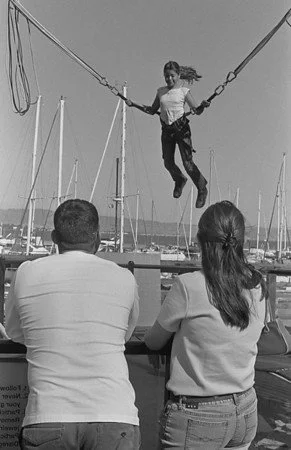
Street photography became an instant addiction. I would spend up to seven hours at a time walking neighborhoods I had mapped out the week before. Sometimes, I would become so fascinated by a single area that I would return to it daily for months. The Tenderloin and Fisherman’s Wharf were two of those places. The photos included below are all analog works from this period, spanning roughly 2004 to 2007.
When I first brought my prints into class, I was completely unaware of my natural knack for portraiture. In fact, I remember feeling like my photos weren't very good. I'm not exactly sure what I was hoping for back then, but in the end, it didn't matter. I shot hundreds of photos for that introductory class.
Henry was even kind enough to help me build a darkroom inside my San Francisco apartment, a gesture I am still deeply grateful for. Once that darkroom was set up, photography became a round-the-clock lifestyle. I would spend hours on the street, come home to process the film, and then head straight into the darkroom to work on my prints. There were days where I wouldn’t see the light of day at all. By the time Henry’s 101 class came to an end, I knew I was hooked—and I knew I was coming back for more.
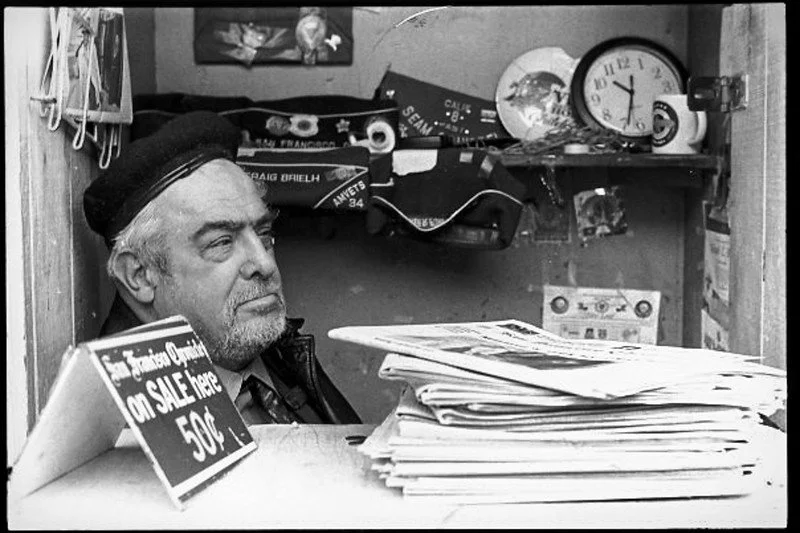
Newspaper Seller, Polk Street, San Francisco
Family at Pier 39, San Francisco
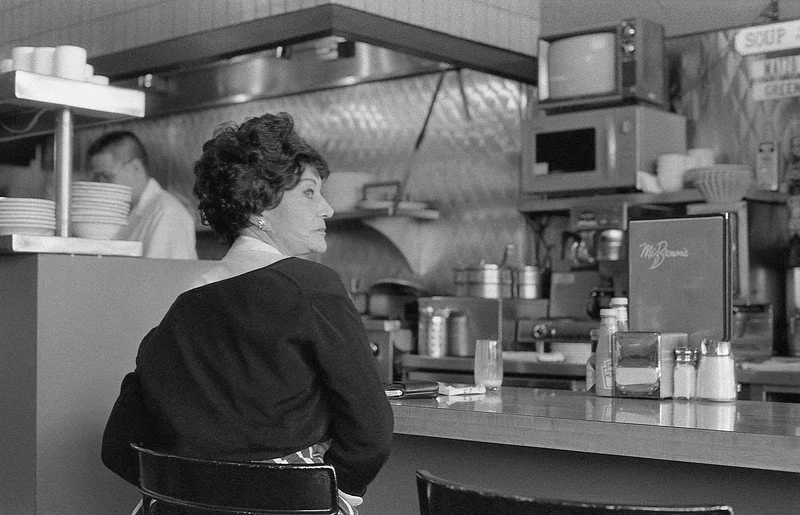
Waitress at MzBrown’s Feedbag, San Francisco
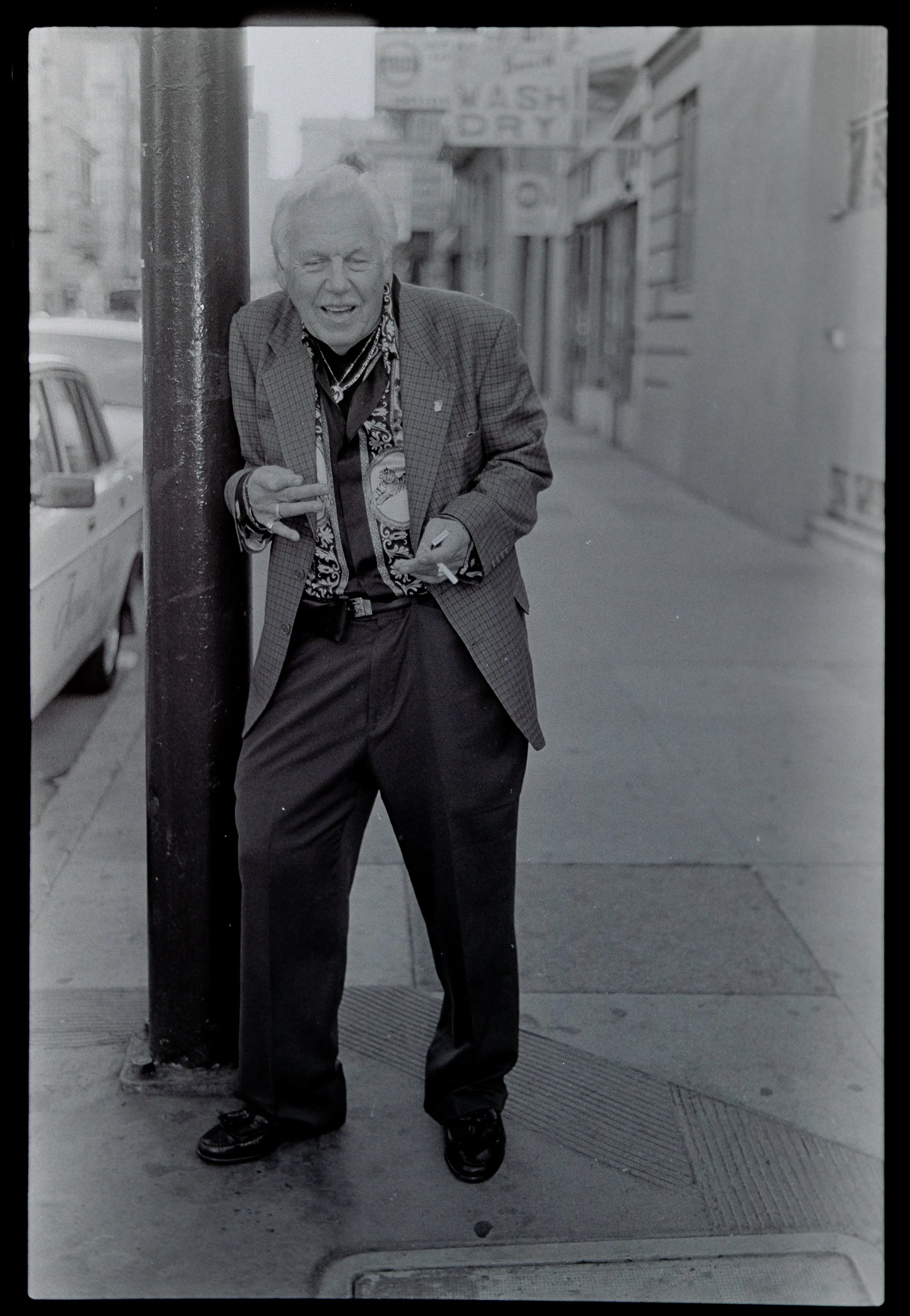
Man Downtown, San Francisco
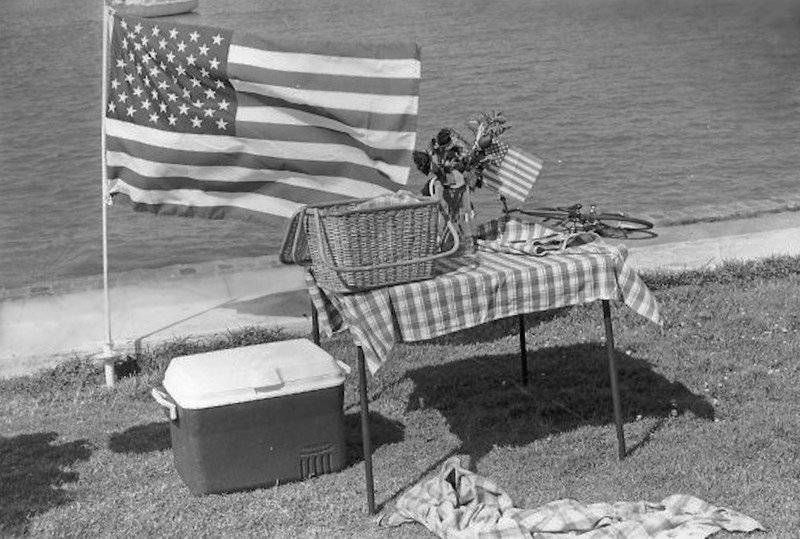
Fisherman’s Wharf, July 4th, San Francisco
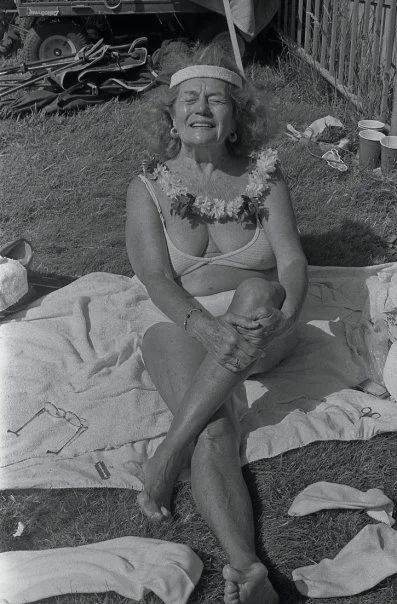
Woman Sunbathing at Fisherman’s Wharf, San Francisco
Lineage and the Studio Archive: Navigating the Edge of Perception
The evolution of an artistic practice is rarely a linear path; it is an ongoing dialogue between a foundational lineage and the raw experimentation of the studio.
My own visual foundation was shaped within a definitive era of West Coast image-making. As a graduate of the San Francisco Art Institute (SFAI), my training was rooted in a discipline of acute, uncompromised perception. Wessel taught a rare standard of intentionality—an understanding that the photographic frame is a psychological landscape where every texture, boundary, and prop carries profound weight.
From 2009 to 2015 in San Francisco, I channeled that rigorous background into a highly focused, independent investigation of studio performance, bodily containment, and industrial staging.
The Foundational Synthesis (2010–2015)
Operating outside the commercial gallery infrastructure allowed the studio to become a pure laboratory. During this hyper-productive window, I began dismantling traditional portraiture by introducing heavy, non-traditional materials to alter and abstract the human form. Looking through this newly opened archive reveals the steady, deliberate development of a distinct aesthetic vocabulary:
The Malleable Environment (2010–2011): Staging complex, multi-figure installations utilizing reflective tinfoil, custom-sculpted wearable headpieces, industrial construction tarps, and suspended grids of hanging string to completely partition the photographic space.
Tactile Alteration (2012-2013): Obliterating traditional skin surfaces by casting bodies in raw plaster and medical gauze, positioned deliberately against custom-fabricated backdrops of repetitive, painted egg-carton grids.
The Fragmented Figure (2014–2015): Creating high-friction studio performances that paired structured wardrobe elements—like tight black underbust corsets and heels—with loose apples scattered across a deconstructed set. This evolved into draping heavy, semi-opaque plastic sheeting over figures positioned on large, circular silver reflective discs.
Throughout this entire arc, the mechanics of the photo studio—the exposed stands, loose cords, and raw edges of the room—remained explicitly visible. It was a conscious choice to anchor highly conceptual actions in a grounded, documentary reality.
The Archive as a Living Narrative
In the broader contemporary landscape, many of these exact aesthetic markers—the manipulation of industrial tarps, the staging of confrontational performances with corsets and scattered props, and the abstraction of the body through restrictive materials—have become central pillars of the current curatorial conversation.
While the art world often experiences parallel movements and shared cultural currents, the value of an independent practice lies in its historical priority. The work produced in San Francisco during that vital 2010–2015 window stands as a fully realized, deeply rooted body of work that anticipated many of the formal concerns dominating the medium today.
By contextualizing these early series alongside my SFAI and Wessel lineage, this archive is not just a look backward—it is a foundational chapter that informs my current practice, offering a rare, documented blueprint of independent West Coast experimentation.
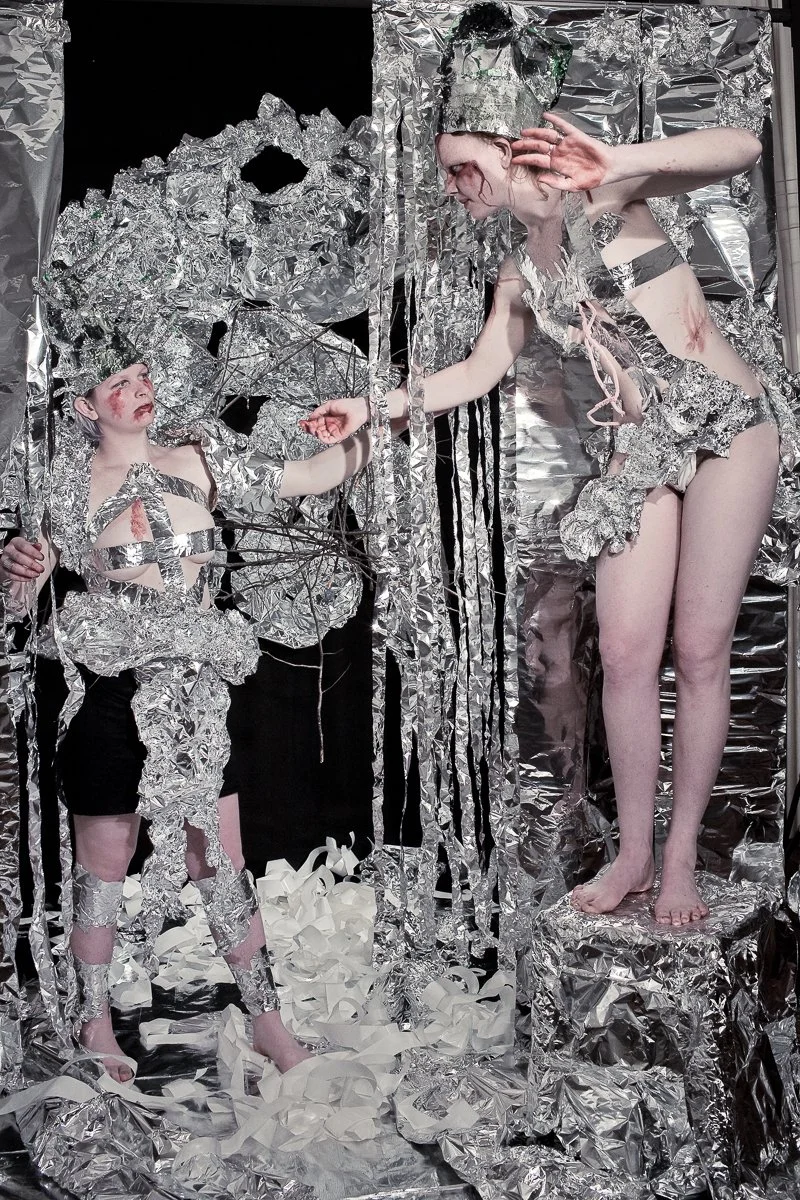
Aluminum Eden — 2010
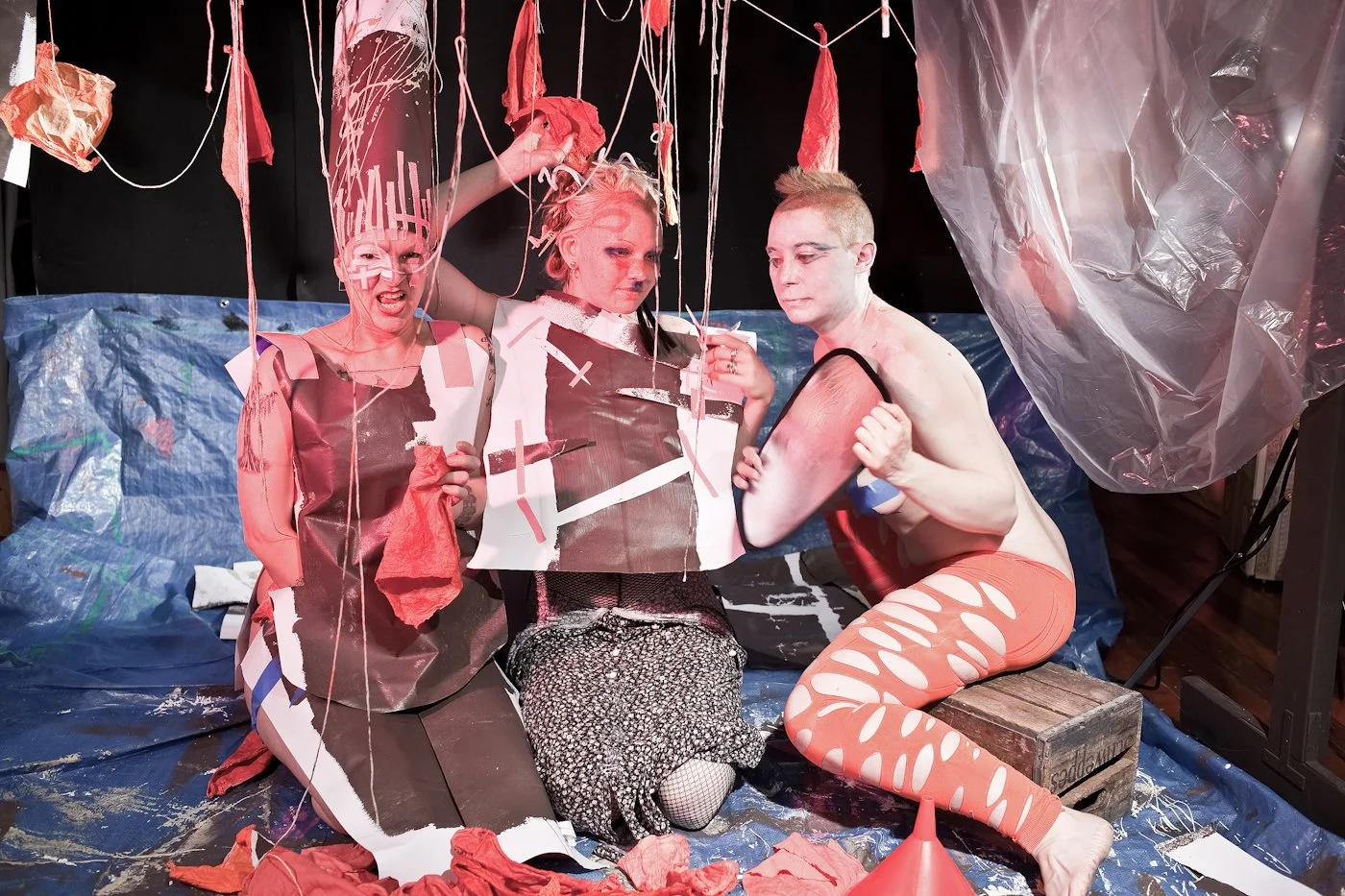
Get Set — 2010
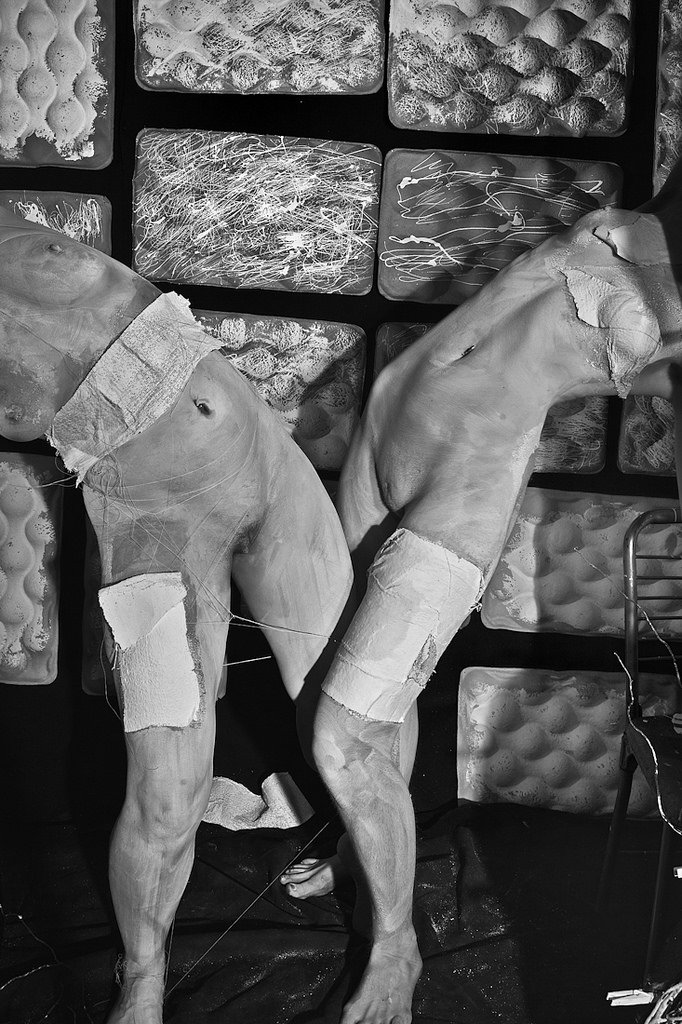
Torsos — 2010
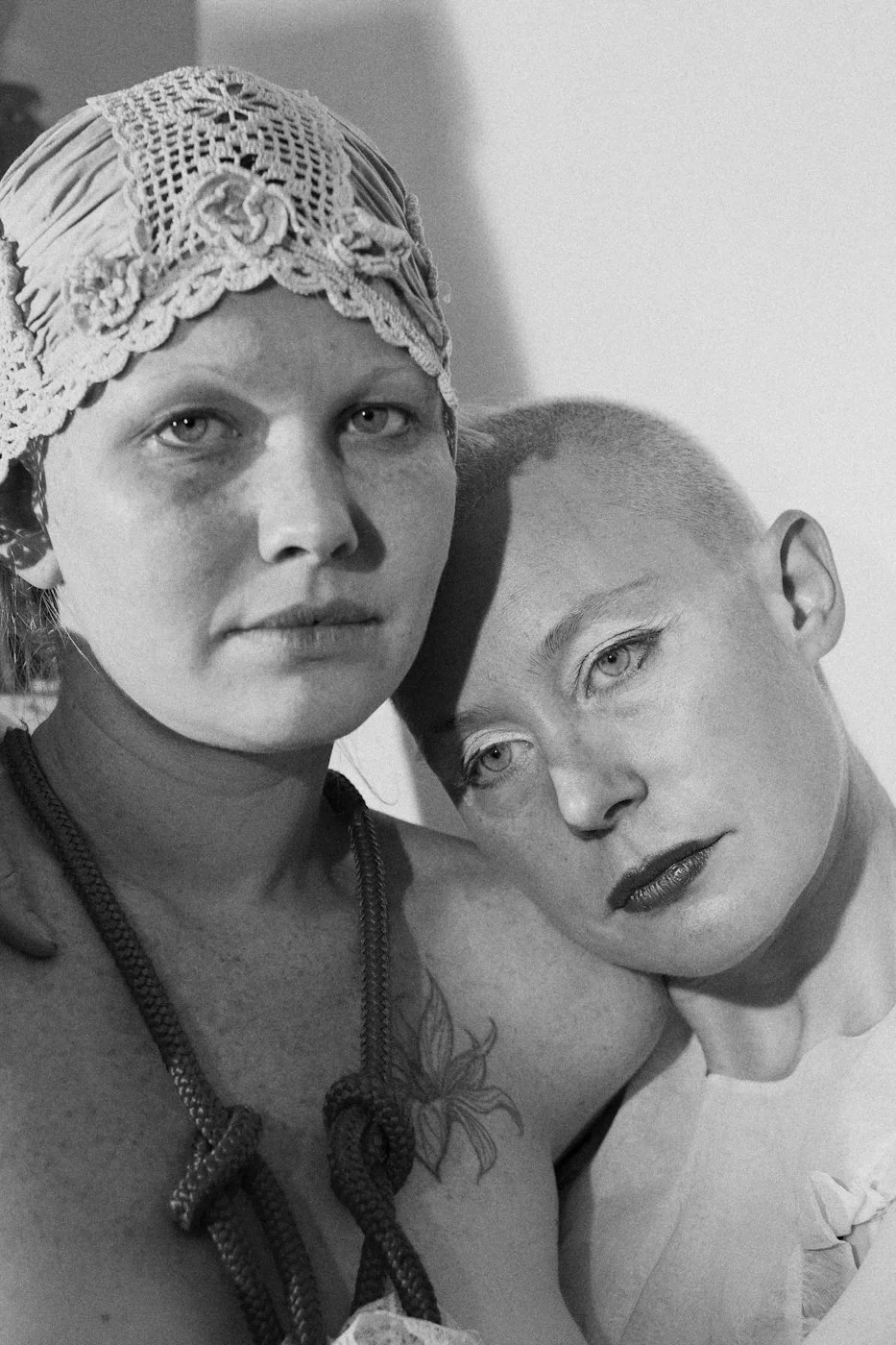
Angela and Me — 2011
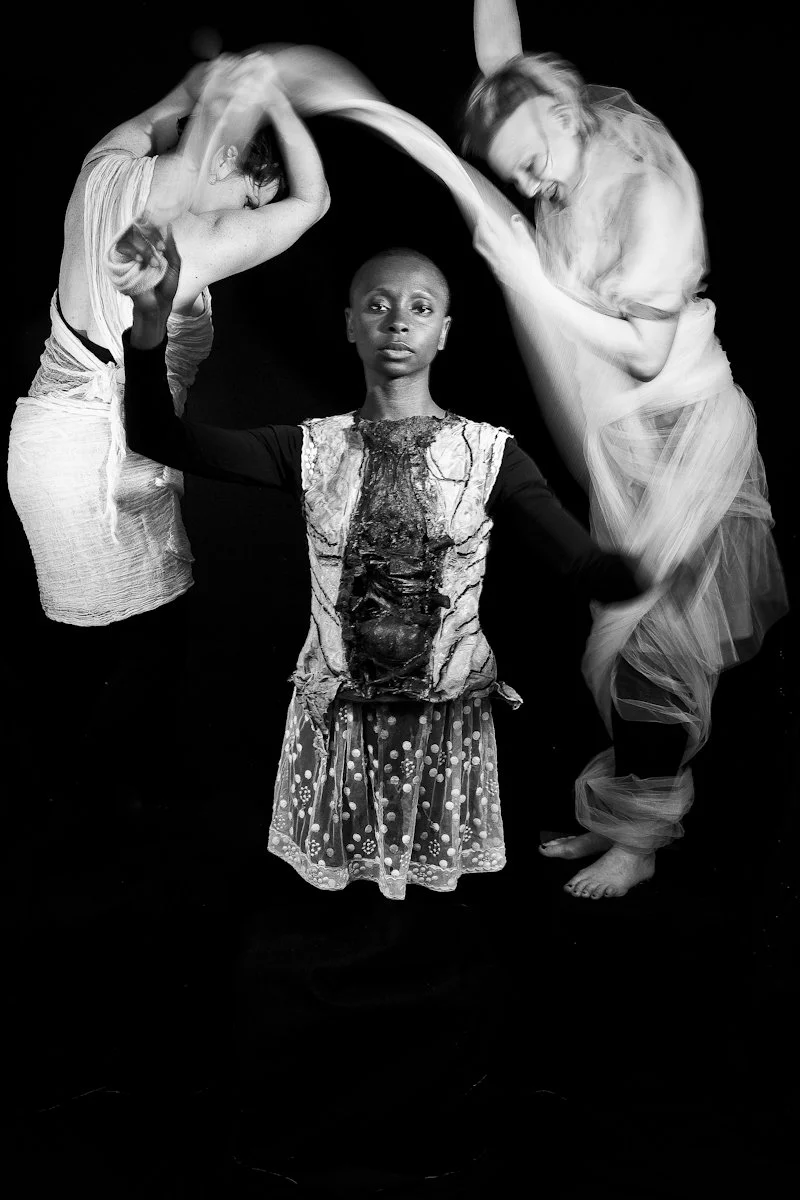
Trio — 2013
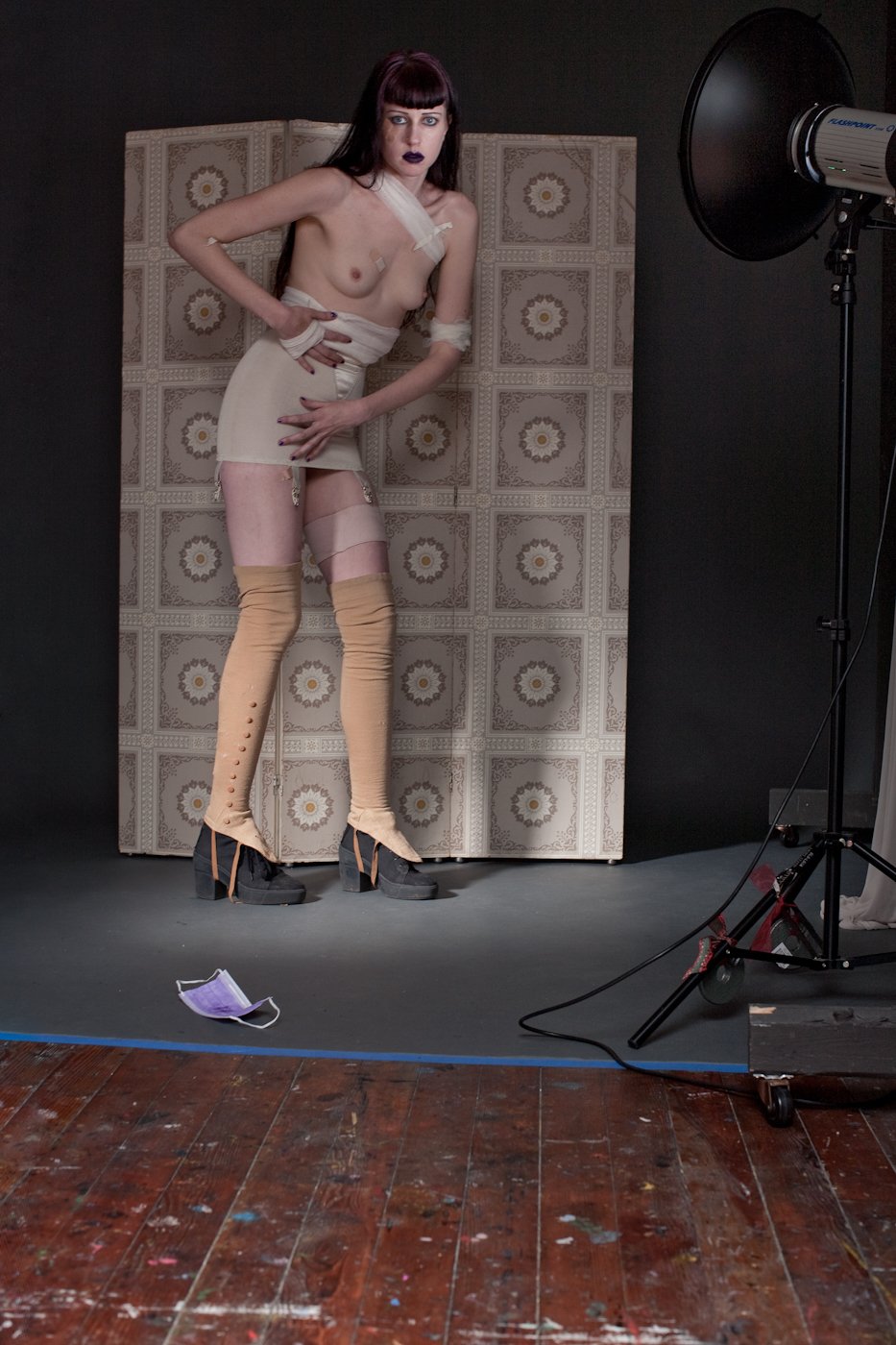
Dorothy’s Body — 2015
The Corporate Corpse and the Death Throes of the Fine Art Circuit
The contemporary fine art landscape is a ghost keeping itself on life support. It has increasingly become an insular, self-perpetuating echo chamber wrapped in layers of dense academic jargon, operating not as a meritocracy of craft, but as a system of mutual validation. Independent creators pour their energy, hope, and resources into mainstream avenues, largely unaware that the infrastructure has drifted away from its original purpose as a genuine search for exceptional vision. It has instead become a closed loop that prioritizes existing relationships and familiar networks over raw, uncompromised talent.
When a creative infrastructure operates as an administrative machine rather than a gateway for groundbreaking imagery, it reveals its true nature. It ceases to function as a talent search and instead becomes a protective mechanism designed to maintain a comfortable status quo.
The True Purpose of Fine Art
This structural drift is not just a disservice to individual artists; it is a direct failure of the fundamental purpose of the medium. Fine art—and specifically the power of the photographic lens—is a philosophical dialogue with society which words cannot fully present. It helps keep society on the path of illumination for the betterment of all.
When functioning purely, fine art handles the unspeakable, the complex, and the deeply human elements of our collective psychology. It acts as an uncompromising mirror, forcing society to confront its fractures, its resilience, and its truths. It requires rigorous, intentional mastery of craft to channel these heavy visual concepts directly into a frame. Because it speaks in a profound visual language that transcends text, it has the unique power to awaken independent thought and guide human consciousness forward.
The Rise of the Compliant Aesthetic
The mainstream arena has completely missed the mark, turning away from this vital civic and philosophical duty. Today, institutional spaces repeatedly elevate an aesthetic that feels actively hostile toward the concept of mastering an art form. The gatekeepers routinely pass over rigorous craftsmanship in favor of loose, accidental abstractions, chemical artifacts, and predictable atmospheric tropes.
This work is championed not because it showcases technical or intentional brilliance, but because it is safe and easily manageable. It functions as a visual blank slate—completely non-offensive to commercial sponsors, perfectly tailored for corporate or hospitality walls, and easily intellectualized by curators who require vague, empty imagery to justify their own lengthy essays. It is art stripped of its teeth, designed to look sophisticated while demanding zero foundational mastery of camera mechanics, lighting, or spatial geometry.
A Disservice to All Creators
The profound tragedy of this system is that it does a massive disservice to everyone involved—including the very artists it chooses to elevate. By crowning work that relies on accidental aesthetics or hollow, superficial trends rather than disciplined craft, the infrastructure functions as a grooming mechanism, conditioning its chosen darlings to accept a drastically lowered artistic standard. They are insulated from honest critique and never challenged to truly master their medium or dig into a deeper philosophical reality.
They are celebrated for compliance rather than growth, used as temporary content to fill seasonal catalog pages and commercial decor pipelines. When the trend shifts, they are cast aside, left with hollow accolades instead of an enduring, rigorous legacy.
Reclaiming the Foundation
When institutions prioritize comfort over rigorous craft, they create a devastating void. They deprive society of the spiritual and the intellectual food it desperately needs to flourish, leaving the culture entirely malnourished. To fix this, the fine art world needs to shake off its comfortable complacency and get back to the true philosophical dialogue that fine art was born from, be it through aesthetics or critique, so art can come back to its proper place—not just an inflated asset floating in a safe bubble.
An Open Letter on Craft, Lineage, and the Preservation of Photographic History
To the Contemporary Photography and Curatorial Community,
Every portfolio submission, archive link, and public gallery sheet represents more than a collection of two-dimensional images. For an artist operating outside the mainstream validation loops, an archive represents a lifelong commitment to a specific formal lineage, a deep responsibility to the history of photography, and a profound desire to give something enduring back to society.
When you evaluate my work—including the multi-figure staging of Aluminum Eden and the formal geometric tension of Women in Pieces—you are looking at a visual vocabulary that was forged through decades of disciplined, quiet, and independent labor.
My visual foundation was shaped within a definitive era of West Coast image-making, grounded in a pivotal private mentorship with master photographer Henry Wessel at the San Francisco Art Institute. He taught a rare standard of intentionality—an understanding that the photographic frame is a psychological landscape where every texture, tonal structure, and spatial boundary carries a profound philosophical weight. He taught me to look closely at the physical world in three dimensions, and to envision how its light, tones, and geometry would translate into the photographic plane.
For a decade in San Francisco, I maintained an independent studio practice rooted entirely in that philosophy. During the day, I worked shifts as a produce worker on Nob Hill, and at night, I brought saved apple boxes, molded pulp cushions, industrial plastic sheeting, and tarps from the grocery floor back to my studio to hand-build my sets and paint massive paper backdrops. I did this work with immense love, dedication, and joy, knowing that a true commitment to the medium requires rigorous, intentional mastery of craft.
In 2016, I was presented with an Art Consignment and Sales Agreement that required me to surrender creative control and the permanent rights to my reproduced imagery. Because I deeply believe that fine art and the power of the photographic lens serve a vital civic and philosophical duty to society, I chose to protect the integrity of my work. I walked away from that contract because my primary responsibility was to preserve the purity of the visual language I had spent my life mastering.
The personal and professional cost of protecting that archive was absolute. In the wake of my refusal to compromise, my ten-year fine art studio was dismantled, a twenty-year marriage was fractured, and my entire physical infrastructure was uprooted, forcing me to leave the city where I had built my practice. I watched as elements of my hard-won visual lexicon—the specific manipulation of industrial tarps, bodily containment, and reflective abstractions—appeared inside the very mainstream institutional spaces I was locked out of, while my primary archive remained isolated.
I write this not out of bitterness, but out of a sincere desire for understanding. I want people to comprehend what it is truly like to be an artist who has sacrificed her home, her studio, and her stability to protect a body of work for the history of photography at large.
They succeeded in disrupting my life, but they failed to destroy the archive.
Respectfully,
Kelly Rae Daugherty